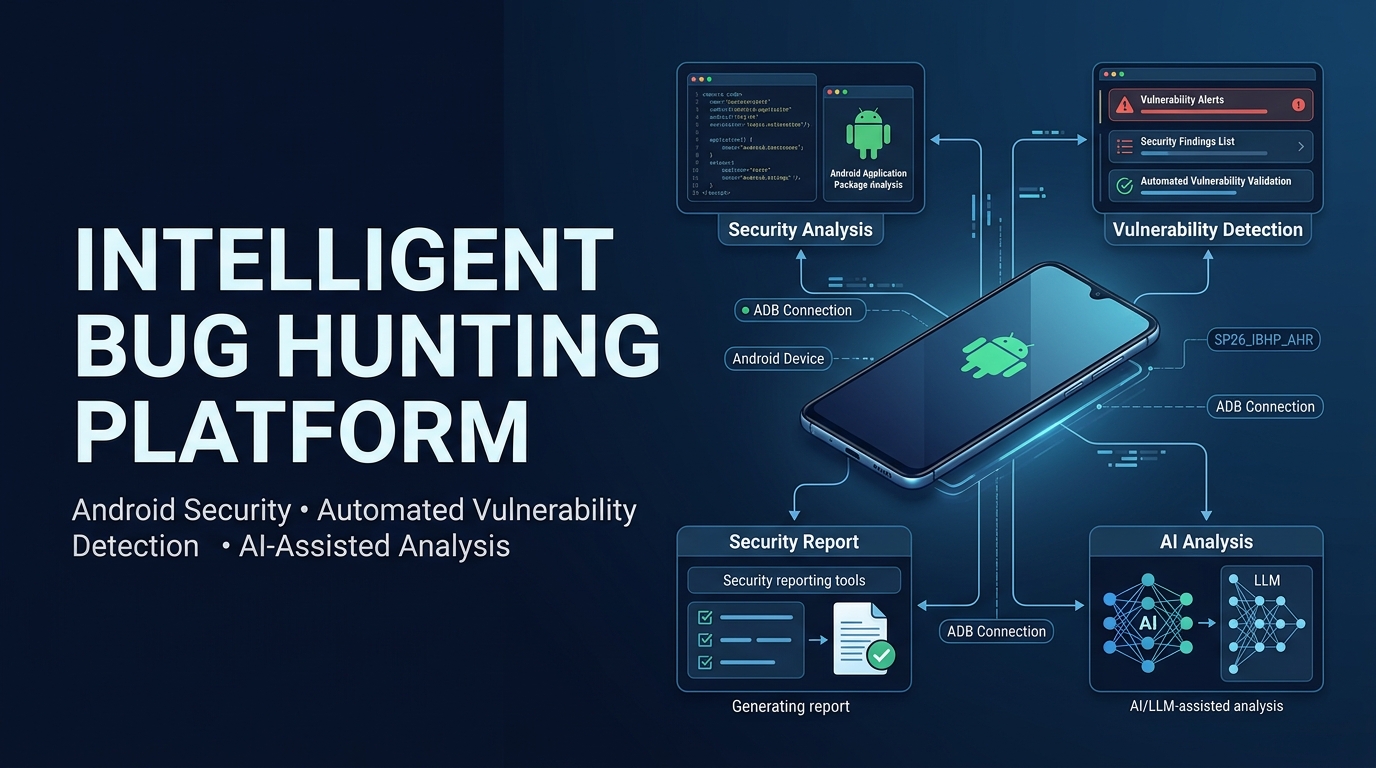
Ask questions, discuss your implementation, or request a support session.
Project Overview
Project Code: SP26_IBHP_AHR
Domain: Software Engineering / Cyber Security
Project Type: Software Product
The Intelligent Bug Hunting Platform is a proposed cybersecurity platform designed to automate security assessment of Android devices, applications, and related system components.
Modern Android devices, IoT devices, and embedded platforms can contain security weaknesses at multiple layers, including firmware, boot configuration, operating-system settings, kernel configuration, network interfaces, cryptographic controls, and installed applications.
Traditional security testing is often performed using separate tools and manual workflows. Static analysis, dynamic testing, traffic interception, reverse engineering, vulnerability validation, and report generation may require multiple tools and significant manual effort.
This project aims to provide a unified platform that can automate significant parts of this process and provide structured security findings with supporting evidence, validation steps, exploitation results, and remediation recommendations.
Problem Statement
Android security vulnerabilities do not always exist at the application layer.
A device may contain weaknesses in:
- Boot integrity
- Verified Boot configuration
- Security patch levels
- Linux kernel versions
- SELinux configuration
- USB debugging configuration
- System interfaces
- Network services
- Bluetooth or NFC configuration
- Cryptographic implementation
- Key management
- Application storage
- Authentication mechanisms
- Network communication
- Android application components
Traditional vulnerability assessment approaches may require security researchers to manually combine several tools and techniques.
The objective of this project is therefore to develop a platform capable of automatically collecting security information, identifying potential vulnerabilities, performing controlled validation, and generating structured reports.
Main Objectives
The platform is intended to provide the following capabilities:
- Android device security assessment
- Android application security analysis
- Automated vulnerability detection
- Vulnerability validation and controlled exploitation
- Device and application evidence collection
- Structured vulnerability reporting
- Remediation recommendations
- AI-assisted security analysis
- Modular security-testing architecture
- Web-based management and reporting interface
Functional Requirements
1. Android Device Bug Detection
The platform should inspect the Android device for security weaknesses at the firmware, boot, operating-system, kernel, interface, network, and cryptographic levels.
1.1 Firmware and Boot Integrity
The platform should identify conditions such as:
- Unlocked bootloader
- Disabled or weakened Verified Boot
- Disabled
dm-verity - Weak boot-chain trust configuration
- Outdated Android security patch level
- Vulnerable Linux kernel version
- Suspicious vendor configuration
- Debug or test interfaces
- Potential vendor backdoors or exposed diagnostic functionality
The platform should collect relevant device information and present the results as structured security findings.
1.2 Operating System and Kernel Misconfiguration
The platform should identify potentially insecure configurations including:
- SELinux in permissive mode
- USB debugging enabled
- Exposed kernel interfaces
- Insecure IPC configuration
- Sensitive information exposed through system logs
- JTAG interfaces where detectable
- UART or diagnostic interfaces where detectable
- Insecure system services
- Excessive privileges
- Potentially dangerous system configurations
Each finding should contain enough evidence to allow further manual verification.
1.3 Network and Interface Exposure
The platform should analyze device networking and exposed interfaces.
Potential checks include:
- Firewall configuration
- Unsafe default network configuration
- Open or unnecessary services
- Bluetooth exposure
- NFC-related exposure
- Insecure OTA configuration
- Diagnostic network interfaces
- Unexpected listening services
- Insecure network communication
The system should distinguish between detected configuration information and confirmed vulnerabilities.
1.4 Cryptography and Key Management
The platform should inspect available device information for potentially weak cryptographic configurations.
Potential checks include:
- Device encryption status
- Hardware-backed security capability
- Secure key-storage mechanisms
- Weak cryptographic configuration
- Weak entropy indicators where measurable
- Insecure key-management practices
- Missing hardware-backed security features
2. Android Application Bug Detection
The platform should support static analysis of Android applications and identify common security weaknesses.
The analysis should be aligned with relevant Android application security practices, including OWASP Mobile Application Security Verification Standard (MASVS) concepts.
2.1 Insecure Data Storage
The platform should detect potential insecure storage of sensitive information.
Examples include:
- Unencrypted
SharedPreferences - World-readable files
- World-writable files
- Sensitive information stored in external storage
- Unencrypted local databases
- Passwords or tokens stored insecurely
- Sensitive information written to logs
- Insecure backup configuration
- Potentially extractable application data
The system should provide the location and evidence associated with each finding where possible.
2.2 Broken Authentication and Session Management
The platform should identify potential weaknesses related to authentication and session management.
Potential checks include:
- Hardcoded credentials
- Hardcoded authentication tokens
- Insecure token storage
- Missing token expiration
- Missing session rotation
- Weak local authentication mechanisms
- Weak biometric fallback mechanisms
- Local authentication bypass opportunities
- Improper authentication state handling
Detected issues should be categorized according to their potential security impact.
2.3 Insecure Network Communication
The platform should analyze application networking configuration and code for insecure communication patterns.
Potential checks include:
- Cleartext HTTP communication
- Improper SSL/TLS validation
- Disabled certificate validation
- Ignoring SSL errors
- Weak certificate configuration
- Missing or incorrectly implemented certificate pinning
- Mixed-content communication
- Insecure WebView networking
- Unsafe network security configuration
2.4 Code Quality and Reverse-Engineering Risks
The platform should inspect applications for security weaknesses that may make reverse engineering or exploitation easier.
Potential checks include:
- Debuggable production applications
- Missing ProGuard/R8 configuration
- Exported Android components without appropriate permissions
- Unsafe deep links
- Dynamic code loading
- Hardcoded cryptographic keys
- Weak random-number generation
- Clipboard data exposure
- Screenshots enabled for sensitive screens
- Sensitive information exposed through application components
- Insecure intents
- Improper component permissions
- Potential side-channel data exposure
3. Automated Exploitation and Validation
The platform should provide controlled workflows for validating identified vulnerabilities.
The objective is not simply to report a suspicious configuration but, where technically and safely possible, to determine whether the identified issue can actually be reproduced.
The validation workflow may include:
- Vulnerability detection
- Evidence collection
- Vulnerability classification
- Validation procedure selection
- Controlled exploitation attempt
- Result collection
- Evidence preservation
- Risk classification
- Remediation recommendation
The system should clearly distinguish between:
- Potential vulnerability
- Detected vulnerability
- Successfully validated vulnerability
- Exploitation attempt failed
- Manual verification required
4. On-Device / Off-Device Analysis
The platform should minimize reliance on traditional traffic-interception proxies.
Instead of requiring an application to route traffic through an external proxy, the platform can collect available device-level information using Android Debug Bridge (ADB) and other authorized device interfaces.
Potential data sources include:
- ADB commands
- Package information
- Application metadata
- System properties
- Device logs
- Network statistics
- Process information
- Installed application information
- Security configuration
- Device configuration
This approach is intended to provide additional visibility into the device while reducing dependency on proxy-based traffic interception.
5. Vulnerability Reporting
The platform should provide a structured bug-reporting workflow.
Each vulnerability report should ideally include:
Vulnerability Information
- Vulnerability title
- Vulnerability category
- Severity
- Affected device or application
- Affected component
- Detection timestamp
- Detection method
Technical Evidence
- Command output
- File or configuration information
- Code location
- Application component
- Network information
- Screenshots where applicable
- Relevant logs
- Other supporting evidence
Validation
- Reproduction steps
- Validation status
- Exploitation result
- Proof of concept where appropriate
- Technical observations
Remediation
- Recommended fix
- Configuration changes
- Secure coding recommendations
- References to relevant security practices
6. Artificial Intelligence Integration
Artificial intelligence is intended to assist the platform with security analysis rather than replace security validation.
The project proposes integration with custom-trained or specialized language models for tasks such as:
- Security finding analysis
- Source-code analysis
- Vulnerability classification
- Finding prioritization
- Exploit-generation assistance
- Proof-of-concept generation
- Remediation recommendations
- Security-report generation
- Correlation of multiple security findings
- Explanation of technical findings
The AI component should operate within controlled workflows and its generated findings should be validated before being treated as confirmed vulnerabilities.
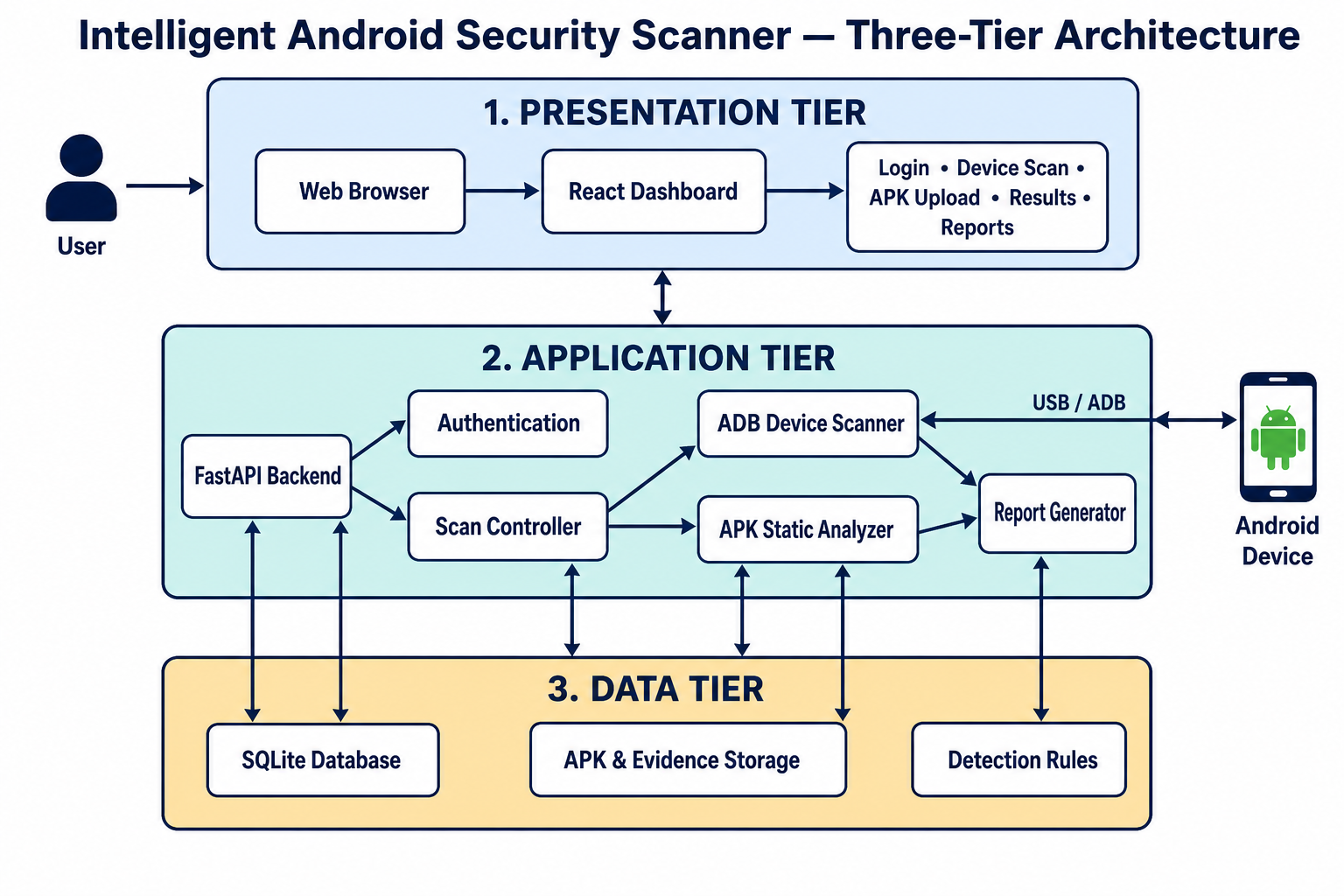
Proposed System Workflow
Project Videos
Project Introduction
A short introduction explaining the Intelligent Bug Hunting Platform, its objectives, problem statement, and proposed security-analysis workflow.
Complete project Demonstration
A complete demonstration of the demo application, including the security-analysis workflow, vulnerability detection, evidence collection, reporting, and AI-assisted analysis.
Need Help With This Project?
Discuss your implementation, architecture, technical problems, cybersecurity requirements, debugging issues, or final project preparation.
Request a Support Session
Complete the form below and your request will be prepared as a WhatsApp message for direct discussion.
First 4 student support sessions are free.
Frequently Asked Questions
What is the Intelligent Bug Hunting Platform?
The Intelligent Bug Hunting Platform is an Android cybersecurity platform designed to automate device security assessment, APK static analysis, vulnerability detection, validation, reporting, and AI-assisted security analysis.
What does the Intelligent Bug Hunting Platform detect?
The platform is designed to identify potential Android device and application security weaknesses, including insecure storage, authentication weaknesses, insecure network communication, exported components, debugging configurations, boot integrity issues, outdated security configurations, and other security findings.
What technologies are used in the Intelligent Bug Hunting Platform?
The proposed technology stack includes Python, Android Debug Bridge (ADB), Android SDK tools, static-analysis tools, web technologies, databases such as MongoDB or SQL-based systems, and AI/LLM technologies.
Is the Intelligent Bug Hunting Platform a vulnerability scanner?
The project is designed as an automated Android security-analysis and bug-hunting platform. It combines device assessment, APK analysis, vulnerability detection, validation, evidence collection, reporting, and AI-assisted analysis.
Is this an Android cybersecurity final year project?
The Intelligent Bug Hunting Platform can serve as a software-engineering and cybersecurity project involving Android security analysis, vulnerability detection, Python development, static analysis, automation, and artificial intelligence.
Does the platform require a proxy?
The proposed design aims to reduce dependence on traditional on-device or off-device traffic proxies by using authorized device interfaces such as ADB and other available device-level information.
What is the project code?
The project code for this Intelligent Bug Hunting Platform is SP26_IBHP_AHR.